Licensed photograph; full credit on the image credits page.
How to attract Anna's Hummingbirds
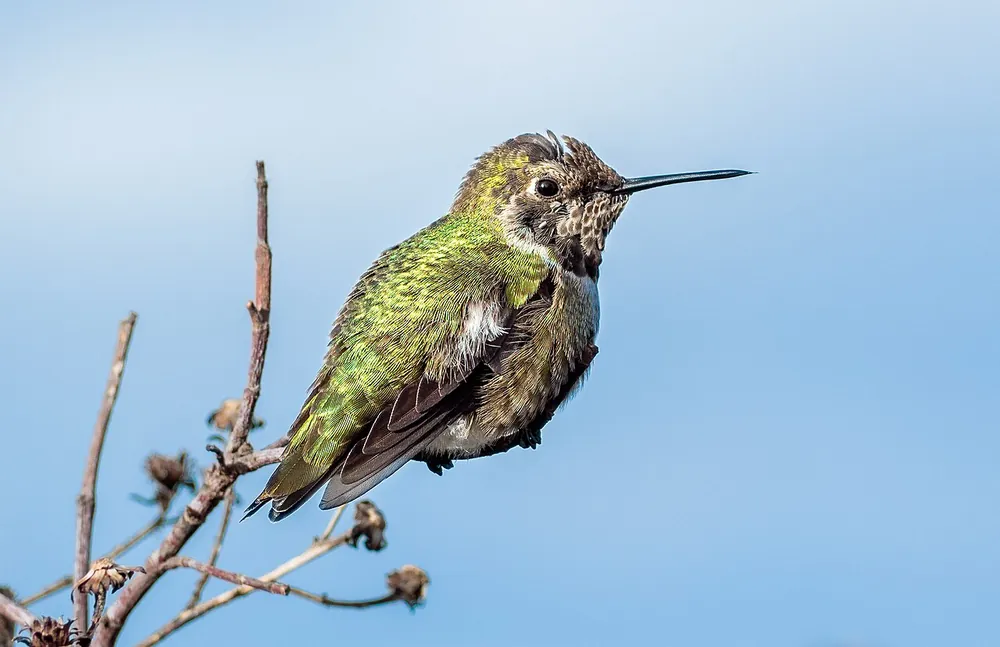
Keep a clean nectar feeder at one part white sugar to four parts water, year-round on the Pacific Coast. Males have a rose-pink crown and throat; this is a resident, not a fleeting summer migrant.
- Food Sugar water / nectar
- Feeder Nectar feeder
- Range Pacific Coast resident
Quick ID
A West Coast resident hummingbird, not a fleeting summer migrant. Males have a rose-pink crown and throat; females are greener with a smaller pink gorget. It was a top early-winter FeederWatch bird in California and Washington in 2026.
Favorite foods, ranked
Ranked from Project FeederWatch and the Cornell Lab, checked November 19, 2026. Favorites first. Individual birds and regions vary.
- Sugar water
The only food Project FeederWatch lists for Anna’s Hummingbird. Follow the Cornell Lab’s guidance in “How to Attract Hummingbirds”: mix one part white sugar to four parts water, skip red dye, and clean the feeder often. We are not attaching a product button here; the official recipe does not require a branded nectar.
No matching title-checked Amazon listing is attached to this page. The foods above follow official lists; see the seed buying guide for verified bags we do sell-link.
Buttons go to title-checked Amazon product pages. As an Amazon Associate, Feeder Almanac earns from qualifying purchases. Read the affiliate disclosure.
Best feeder type
Project FeederWatch lists: Nectar feeder.
FeederWatch lists only a nectar feeder and only sugar water. Cornell’s hummingbird guidance is the recipe and hygiene standard we follow: one part refined white sugar to four parts water, no red dye, and frequent cleaning. Hang the feeder in a visible spot; Cornell notes that bottle-style feeders may leak in direct sun, and that several feeders separated by vegetation can host more birds than one crowded station.
Placement, cover, and water
Cornell Lab advice on feeder placement is the same starting point for every species on this page. Place a feeder where you can see it, and keep it safe from windows and predators. The Lab says feeders are often safest closer than 3 feet to a picture window (or mounted on the glass), because a bird that hits the glass from that short hop is not at full speed. Offer nearby cover — evergreens are ideal — so birds can rest and escape a hawk, but keep the feeder about 10 feet from branches and shrubs so squirrels and cats cannot use them as a launch point. See Where to Put Your Bird Feeder.
A shallow, clean birdbath helps as much as an extra bag of seed. Cornell recommends water close to cover, easy to clean, and preferably with a little motion on the surface. Keep it filled, and scrub it often enough that algae does not take over. In cold weather, keep water open rather than adding antifreeze or glycerin, which can mat feathers.
Season and range
A permanent resident along the Pacific Coast, now regular from California into the Pacific Northwest. It was second in California and fifth in Washington in the November 1–13, 2026 FeederWatch window. It is not a Ruby-throated Hummingbird, the summer hummingbird of the East.
Present in winter on the West Coast, which is why a clean nectar feeder matters in November as well as in May. In freezing weather, bring feeders in overnight or use a design that resists ice; never add honey, brown sugar, or artificial sweetener — Cornell’s recipe is plain white sugar.
Sources
- Project FeederWatch, Common Feeder Birds tool, for the foods and feeder types listed on this page, checked November 19, 2026.
- Project FeederWatch, Food Types and Feeder Types.
- Cornell Lab of Ornithology, Feeding Birds: a Quick Guide to Seed Types; How to Choose the Right Kind of Bird Feeder; and Where to Put Your Bird Feeder.
- Cornell Lab of Ornithology, All About Birds: Anna's Hummingbird, for identification and range. Check that page for the current map.
- National Audubon Society, The Audubon Guide to Winter Bird Feeding and the Audubon Guide to Bird Feeding (PDF), for food, water, cover, and feeder-level advice that complements the Cornell placement guidance.
- Our seed chart and bird-seed buying guide for product matches. Amazon buttons go to product pages already title-checked for this site. As an Amazon Associate, Feeder Almanac earns from qualifying purchases.